

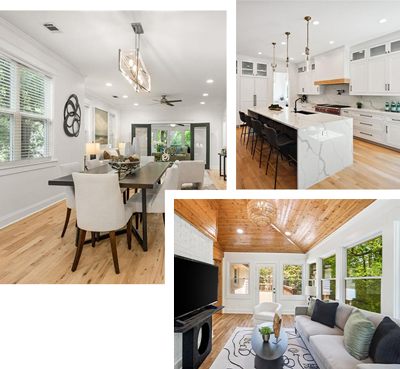


Staging can make a major difference in how buyers experience a property, but the process is not the same for every home.
A property that is completely empty creates different challenges than one where the seller is still living, and this article goes over the main staging differences that can affect presentation, preparation, and buyer appeal.
Differences Between Vacant Home vs Occupied Home Staging
The biggest difference between vacant home vs occupied home staging is what the stager has available to work with from the beginning.
An empty property usually starts as a blank space, so furniture, artwork, lighting, rugs, and accessories may need to be brought in to create a complete look.
An occupied property already has furniture and personal belongings, which means the first step is often deciding what should stay, what should move, and what should be stored while the home is listed.
These different starting points also change the overall staging strategy. Vacant properties often need enough furnishings to help buyers understand the purpose and scale of important rooms without making the home feel overly decorated. Occupied properties usually need editing rather than filling.
Removing unnecessary furniture, reducing personal items, and simplifying surfaces can help the home feel more open.
The goal in either situation is to create rooms that feel inviting, balanced, and easy for buyers to understand as soon as they enter.
Buyer Perception of Empty and Lived-In Spaces
Buyer perception can change quickly depending on whether a property feels empty or lived in.
When considering vacant home vs occupied home staging, an empty room may look larger at first, but buyers can also have trouble judging its true size.

Without a sofa, bed, dining table, or other familiar objects for reference, it may be difficult to picture how furniture will fit or how the room could function in everyday life.
A lived-in home creates a different impression because buyers immediately see how the rooms are being used. That can be helpful when the furniture is appropriately sized, and the space feels organized.
However, too many personal belongings can distract buyers from the property itself. Family photos, collections, crowded shelves, and highly personal decor may cause visitors to focus on the current owner rather than imagine their own life in the home.
Effective staging gives buyers enough visual guidance to understand the space while leaving enough room for them to imagine making the property their own.
In a vacant property, that usually means adding warmth and purpose. In an occupied property, it often means reducing visual distractions and creating a more neutral environment.
Furniture Needs in Vacant vs Occupied Homes
Furniture requirements are one of the most noticeable differences in vacant home vs occupied home staging. A completely empty property may require rental furniture for the living room, dining area, primary bedroom, and other important spaces.
The goal is not necessarily to furnish every room. Instead, staging can focus on the areas that have the greatest influence on a buyer’s first impression and understanding of the home’s layout.
Occupied homes often have the opposite challenge. Instead of needing more furniture, they may benefit from having fewer pieces in each room.
Large sectionals, extra chairs, oversized tables, unused cabinets, and additional bedroom furniture can make rooms appear tighter than they actually are. Removing or repositioning some pieces can improve walking paths and allow buyers to see more of the room.
Existing furniture can also be combined with temporary staging pieces when needed. A seller may have a suitable dining table but need updated chairs, or the primary bedroom may need new bedding and accessories rather than an entirely different furniture set.
Furniture should support the proportions and function of the room instead of becoming the main thing buyers notice. This approach keeps attention on the property while still giving each important space a clear purpose.
Photography and Listing Presentation Differences
Online photos are often a buyer’s first introduction to a property, making presentation especially important for both vacant and occupied listings. With vacant home vs occupied home staging, empty spaces can sometimes appear flat or difficult to understand in photographs.
Similar walls and flooring can blend together, and buyers may struggle to tell how large a room is when there are no furnishings providing visual scale.

Thoughtful staging can add depth and structure to vacant rooms. A sofa can establish the living area, a dining table can define an open dining space, and a bed can immediately show buyers how comfortably a bedroom accommodates furniture.
Rugs, lamps, artwork, and smaller accessories can also create visual layers that help photographs feel warmer without making the room look crowded.
Occupied homes require careful preparation for a different reason. Everyday items that seem normal in person can become surprisingly noticeable in listing photos.
Countertop appliances, toiletries, pet supplies, cords, paperwork, children’s items, and crowded shelves may pull attention away from the home’s permanent features.
Listing photos should make it easy for buyers to notice the property’s space, layout, finishes, and most appealing features before they focus on anything else. Preparing each room specifically for the camera can help create cleaner and more consistent listing images.
Comparing Time, Cost, and Preparation Requirements
Budget and preparation can vary considerably between vacant home vs occupied home staging. Vacant properties may involve furniture rental, delivery, installation, styling, and eventual removal.
The exact cost depends on factors such as the size of the property, how many rooms are staged, the furniture selected, and how long the staging remains in place.
Focusing on key rooms can sometimes provide the visual impact a listing needs without furnishing every area of the house.
Occupied staging may require less rented furniture, but that does not mean preparation is always faster. Sellers may need time to sort belongings, pack personal items, move excess furniture, organize closets, clear surfaces, and complete small updates.
They also have to maintain the staged appearance while continuing to live in the property, which can require daily attention before showings and open houses.
The most useful staging plan considers both the upfront work and what will be realistic to maintain throughout the listing period. A beautifully prepared occupied home can quickly lose its impact if the setup is too difficult for the household to keep organized.
Likewise, vacant staging should be planned around the expected listing timeline so rental periods, access, and removal can be managed efficiently.
Flexibility Differences in Room Layout and Design
Design flexibility is another important consideration when comparing vacant home vs occupied home staging. A vacant property gives the stager freedom to build a layout without needing to accommodate the owner’s existing furniture or daily routine.
Furniture can be selected specifically for the dimensions of each room, allowing the design to emphasize natural light, architectural details, open walkways, attractive views, or other selling features.
Occupied staging requires a more adaptive approach. The design has to work with furniture the homeowner may still need every day, and some pieces may not be ideal for the room from a staging perspective.
Rather than replacing everything, the stager can adjust furniture placement, remove unnecessary pieces, relocate accessories, and introduce a few new elements where they will have the greatest effect.
The final layout still needs to be comfortable enough for the household to use while the home is on the market.
Vacant homes can also offer more freedom when defining unusual or open spaces. An empty nook might become a small office, while a large open area can be divided visually into living and dining zones.
In an occupied property, existing habits may already define those spaces, so changes have to be made more selectively.
A successful layout should make every important area feel intentional while keeping movement through the home simple and natural for potential buyers.